



Best dental clinic I have ever been to! Not only is the dental staff extremely nice and polite, but Dr. Mariana Blagoev is such a kind-hearted individual. I was able to witness her transform a friend’s old filling into a new, much improved one with no pain whatsoever. Even though my friend gets extremely anxious around Dentists, Dr. Mariana was able to calm and reassure my friend multiple times, allowing her to feel completely relaxed. I was also happy with how Dr. Mariana took her time with the fillings to ensure absolute perfection, which unfortunately not many dentists do. The new fillings completely transformed my friend’s smile, and thanks to Dr. Mariana, my friend is able to smile confidently now. 100% recommend!
Quick Summary
Dental implants replace missing teeth from the root up using a titanium post that fuses permanently with the jawbone. The process moves through several stages, including consultation, possible bone grafting, implant surgery, osseointegration, and crown placement. Good candidacy depends on factors such as bone density, gum health, and overall medical history, and preparatory treatment is available for those who do not qualify outright. Aftercare mirrors natural tooth care, and knowing the right questions to ask before committing to treatment helps patients move forward with a clear and realistic plan.
Losing a tooth changes more than your smile. It can affect the way you eat, speak, and feel about yourself day to day. The good news is that dental implants have become one of the most reliable and long-lasting solutions for tooth replacement, and getting them in New Jersey is more accessible than many people assume. At Bright Smiles Dental in Parlin, we walk patients through how to get dental implants from start to finish, so nothing comes as a surprise.
This guide covers the full process for getting dental implants, from the very first appointment to the moment your new crown is placed, along with what to expect regarding healing and care.
How to Get Dental Implants: The Process from Start to Finish
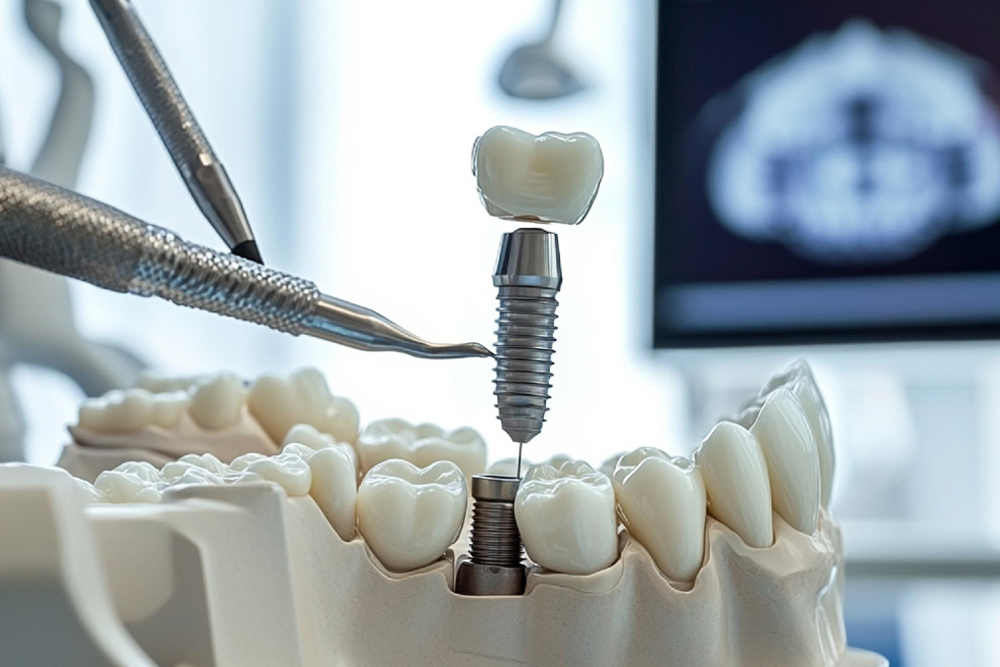
Before anything else, it helps to know what a dental implant is. A dental implant is a small titanium post that is surgically placed into the jawbone, where it acts as an artificial tooth root. Once it fuses with the bone, a custom crown is attached on top to replace the visible portion of the missing tooth. The result looks, feels, and functions like a natural tooth.
The process for dental implants is not a single appointment. It unfolds in stages over weeks or months, depending on the patient’s oral health, bone density, and treatment plan. Here is what the journey typically looks like.
Step 1: Your Initial Consultation
The first step is a consultation with your dentist. This appointment is where your provider evaluates whether you are a good candidate for implants and begins mapping out your treatment plan.
During this visit, your dental team will:
- Check your bone density: Adequate jawbone volume is required to support the implant. X-rays or 3D imaging are used to assess the condition of your jaw.
- Review your gum health: Healthy gums are essential before implant surgery begins. Active gum disease needs to be treated first.
- Assess the number of teeth to replace: A treatment plan is created based on how many teeth are missing and where they are located.
- Discuss your medical history: Certain health conditions and medications can affect healing and candidacy, so your full health picture is taken into account.
No two consultations look the same because no two patients are in the same situation. This appointment is your opportunity to ask questions, understand your options, and get a clear sense of what the process ahead involves.
Step 2: Addressing Bone Loss Before Implant Placement
This is a step not every patient will need, but it is worth knowing about. After a tooth is lost, the jawbone in that area gradually loses density because it no longer receives stimulation from a tooth root. If enough bone has been lost, the jaw may not be strong enough to hold an implant securely.
In cases like this, a bone graft is recommended before implant placement. A bone graft involves adding bone material to the area of the jaw where the implant will eventually go. The material can come from another part of your body or from a donor source. Over the following months, your body integrates this new material and the jaw becomes strong enough to support an implant.
This step adds time to the overall process. However, it is what makes implants possible for patients who would otherwise not be candidates.
Step 3: Implant Placement Surgery
Once your jaw is ready, the implant post is placed during a surgical appointment. This is done under local anesthesia, so the area is fully numb during the procedure. Patients often describe feeling pressure or vibration rather than pain.
The dentist makes a small incision in the gum tissue, places the titanium post into the jawbone, and closes the area. If you are having multiple implants placed, this can all be done in the same session. In some straightforward cases, an implant can even be placed the same day a tooth is extracted, provided the bone is healthy enough.
After the appointment, post-operative instructions are provided to help manage any swelling and protect the surgical site as healing begins. Most patients return to normal activities within a few days.
Step 4: Osseointegration, the Healing Phase
This is the stage that takes the most time, and it is also the most important. After the implant is placed, the bone needs time to grow around the titanium post and fuse with it. This process is called osseointegration.
Osseointegration is what gives dental implants their stability and longevity. The implant is not simply sitting in the jaw; it becomes part of it. This fusion is what allows implants to function so similarly to natural teeth.
Depending on the individual, this healing phase can take anywhere from a few months to several months. Rushing this stage is not an option, and your dental team will monitor progress along the way. Temporary restorations may be placed in the interim to prevent a visible gap during healing.
Step 5: Placing the Abutment and Crown
Once the implant has fully integrated with the bone, the final phase of the process begins. An abutment (which is a small connector piece) is attached to the top of the implant post. This is what the custom crown will be secured to.
Impressions or digital scans of your mouth are taken to create a crown that matches the shape, size, and color of your surrounding teeth. When it is ready, the crown is attached to the abutment, completing the restoration.
At this point, the implant looks and functions like a natural tooth. Patients are often surprised by how seamlessly the crown blends in with the rest of their smile.
Types of Implant Restorations
The process described above applies to a single tooth replacement, but implants can be used in several different ways depending on how many teeth need to be replaced:
- Single tooth implant: One post and one crown to replace one missing tooth. The process can be repeated in multiple areas of the mouth as needed.
- Implant-supported bridge: Two or more implant posts are used to support a bridge that replaces multiple adjacent missing teeth, without relying on neighboring natural teeth for support.
- Full arch restoration (All-on-4): For patients missing all or most of their teeth, a series of implant posts is placed to support a full arch of replacement teeth. This is a fixed solution, not a removable one.
Your dentist will recommend the appropriate type of restoration based on your specific needs during the consultation.
Who Makes a Good Candidate for Dental Implants in New Jersey
Candidacy depends on a combination of factors that your dental team will assess before recommending implants as the best course of action.
Generally speaking, good candidates tend to share a few common characteristics:
- Good overall health: Certain medical conditions, such as uncontrolled diabetes or autoimmune disorders, can interfere with healing and affect how well the implant integrates with the bone.
- Non-smokers or those willing to quit: Smoking significantly reduces blood flow to the gums and bone, which slows healing and raises the risk of implant complications.
- Adequate bone density: A sufficient amount of healthy jawbone is needed to anchor the implant. Patients who do not meet this requirement may still qualify after bone grafting.
- Healthy gums: Gum disease must be fully treated before moving forward. Placing an implant in an unhealthy environment puts the entire restoration at risk.
- Fully developed jaw: Implants are generally not placed in patients whose jawbones are still developing, which is why they are typically recommended for adults.
Age alone is not a disqualifying factor. Older adults in good health are often excellent candidates and achieve very successful outcomes.
What to Ask at Your Dental Implant Consultation
Walking into a consultation prepared makes a real difference. Knowing which questions to ask helps you leave with a clear picture of your situation and your treatment path. Here are some worth bringing up:
- Am I a candidate as things stand, or will I need preparatory treatment first? This tells you upfront whether bone grafting or gum treatment is part of your plan.
- How many implants do I need, and what type of restoration is recommended? The answer shapes both the timeline and the overall cost of treatment.
- What does the full timeline look like for my specific case? Timelines vary widely, so getting a realistic estimate based on your own oral health is more useful than a general answer.
- What financing options are available? Understanding payment flexibility early helps you plan without feeling caught off guard later.
- What should I avoid doing before and after surgery? Pre and post-operative guidelines vary by patient, and following them closely affects how well healing goes.
- What does long-term maintenance look like? Knowing what regular care and follow-up visits involve helps you stay on top of protecting your investment over time.
A good dental team will welcome these questions and take the time to answer them thoroughly. If something is unclear, ask again. Going into treatment informed is always worthwhile.
Understanding the Timeline
One of the questions patients ask most often is how long the whole process takes. The honest answer is that it varies.
A patient with good bone density who only needs a single implant may complete the process in a few months. A patient who needs bone grafting first, or who is having multiple implants placed, could be looking at a year or more from start to finish.
The timeline can feel long, but the outcome is a restoration that, with proper care, can last a lifetime. It is a long-term investment in your oral health, not just a cosmetic fix.
Caring for Your Dental Implants After Treatment
Dental implants do not require a complicated care routine. In fact, caring for them is very similar to caring for natural teeth:
- Brushing: Brush twice daily using a soft-bristle toothbrush, making sure to clean around the base of the implant crown.
- Flossing: Floss daily, including around the implant. Special floss or interdental brushes can make this easier.
- Regular check-ups: Routine dental visits are important to monitor the implant site and catch any issues early.
- Avoiding damaging habits: Biting on hard objects or using teeth as tools can put stress on both natural teeth and implants, so these habits are best avoided.
With consistent care, dental implants can last decades. The crown itself may eventually need to be replaced due to normal wear, but the implant post, once fully integrated, tends to be very durable.
Ready to Take the Next Step Toward a Complete Smile?
The process for getting dental implants in New Jersey is straightforward when you have a dental team guiding you through it. From the initial evaluation to the final crown, every stage is designed to deliver a result that looks natural, holds up over time, and improves your quality of life.
At Bright Smiles Dental, we take the time to walk patients through their options with care, without pressure. We offer general and restorative dental care under one roof, so you do not have to visit multiple offices or referrals to get the treatment you need.
To find out whether dental implants are the right fit for you, schedule a consultation with our team today.
FAQs
Active gum disease needs to be treated and stabilized before implant placement can begin. Proceeding with unhealthy gums increases the risk of implant failure. Once the gums are healthy, candidacy for implants can be reassessed.
The surgical placement is performed under local anesthesia, so discomfort during the procedure is minimal. Afterward, some soreness and swelling are normal for a few days and are manageable with standard post-operative care.
Implant failure due to poor osseointegration is uncommon but possible. Factors like smoking, uncontrolled diabetes, or insufficient bone density can contribute. In some cases, the area heals, and a second implant attempt can be made after evaluation.
